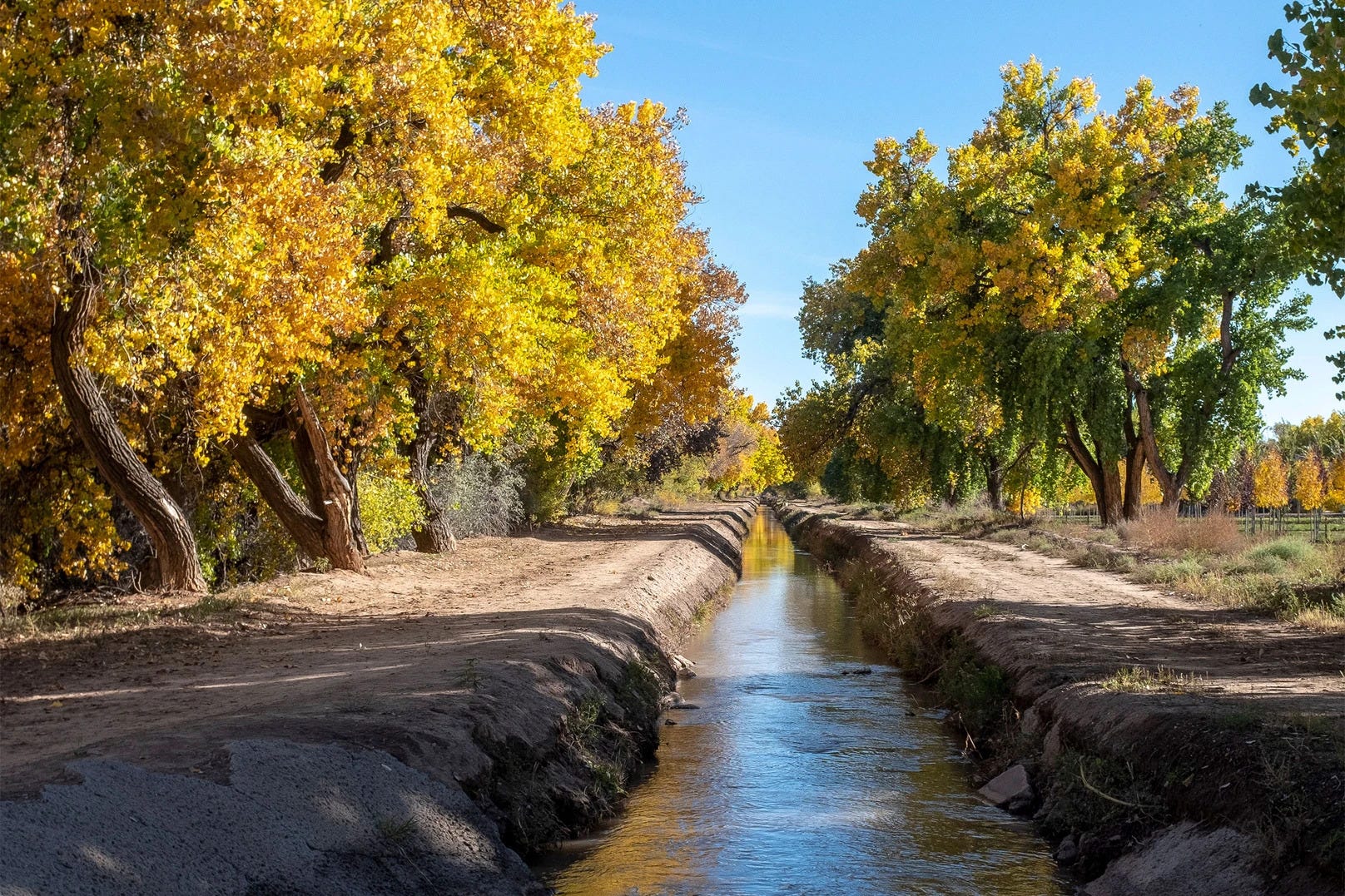
November in New Mexico is the start of winter, it comes on in gray clouds and chilly mornings. The cold weather creeps in alongside shorter days and the business of the holidays looms. As same everyday routines continue the trees are turning away. While the leaves are just beginning to yellow. A good freeze will snap them from the branches on morning walks we’ll see shivering branches shaking off their golden canopy.
We live and work in the North Valley of Albuquerque It’s an early agricultural expansion out of the central Old Town neighborhood. Meandering through the city are irrigation lines called Acequias. The path along the waterways is a beautiful daily walk that is lined by tall cottonwoods just beginning to change to a golden yellow. Ducks glide along the water. Geese honk from above. It is easy to feel out of the rush of time, only moments walking along and following the current.
This is a path that was started over 400 years ago.
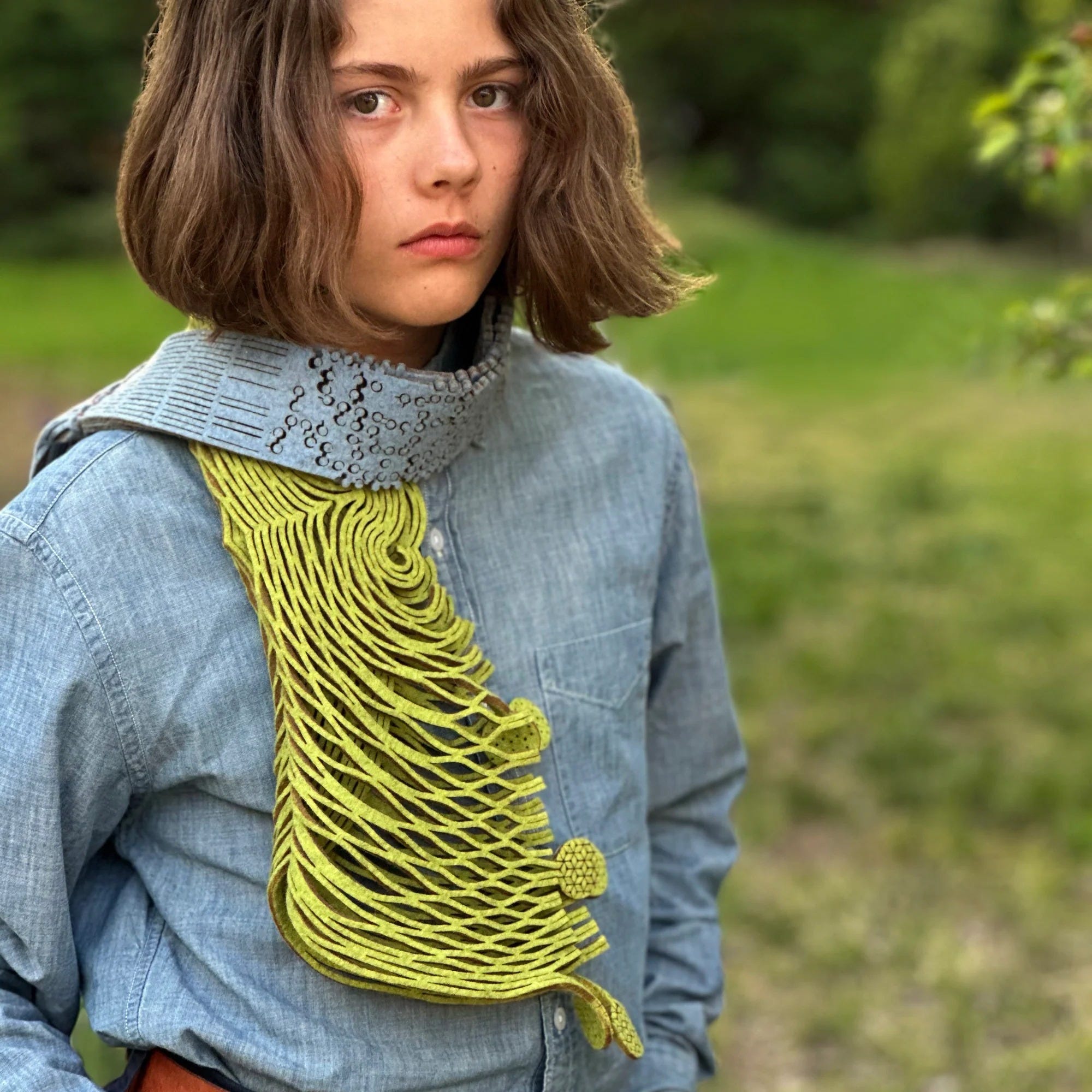
We live in a high desert that receives less than nine inches of rain a year. The water-hungry cottonwoods live in synergy with the man made ditches they shelter with their towering branches. Rain and snowmelt off the nearby mountain winds down into the Rio Grande. Diversion dams carry the current into a medieval network of irrigation ditches that run like arteries throughout the North and South Valley neighborhoods. The cottonwoods extend their roots toward the water they need and in turn they provide stability to the banks of the irrigation and shelter the waterway from the evaporative desert sun.This water has fed pastures and farmland for centuries and today still supports local small and community farms and it became the foundation for our Acequia Scarf.
Mud, Shovels, and Inspiration
There is something uncanny about stepping off asphalt, walking through the scrub brush and bare trees 100 feet past a grocery store to be standing beside a medieval engineering system.
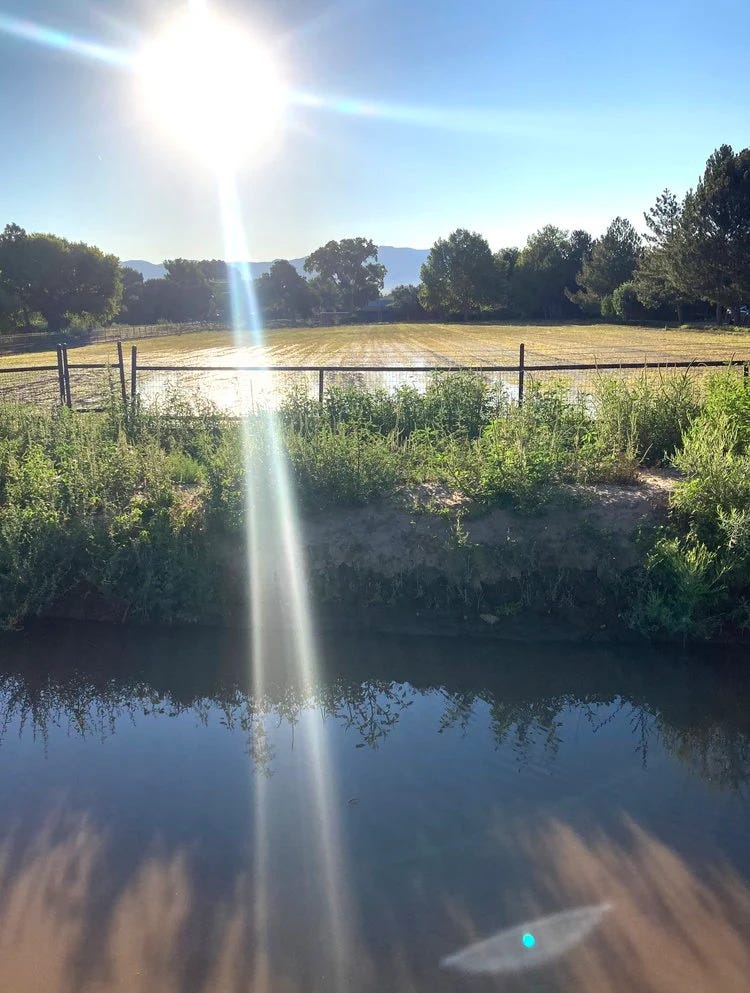
Because these waterways were so vital to the communities that maintained them, they carry immense cultural weight. As a kid I heard the stories of La Llorona, the wailing woman haunting the waterways, looking to steal wandering children. The chain-link-fenced cement ditches I grew up around in Tucumcari never resonated with those stories. Here in Northern New Mexico, walking the open paths beside the rushing water those tales feel alive. The slippery banks and the steady current are a visceral concern.
In the late teens and early 1920s the rail lines brought artists to communities like Taos and Santa Fe. Artists communities centered on the Acequia Madre Road in Santa Fe and feature in the paintings of John Sloan and in the Willa Cather novel Death Comes for the Archbishop.
As haunted as the acequias appear in folklore and romantic in period paintings, have always been grounded in physical labor. In his book Mayordomo, Stanley Crawford chronicles his time as a ditch boss in Dixon, New Mexico. Crawford strips away the romanticism, laying out the joy, frustration, and muddy reality of serving a community in a landscape defined by water scarcity. A good friend of ours, his daughter teaches Landscape Architecture at the University here in Albuquerque.
Maintaining this system has required constant digging, neighborhood negotiation, and seasonal cleaning. The hush of the leaves and the gurgling water running past rusty gates provide a deep sense of peace, but that peace is created out of a collaboration between indigenous knowledge, early settler survival, and gravity. Ducks glide on the current looking for crawdads and the migrating geese and sandhill cranes squabble by the hundreds in the nearby fields. The ditch is a cut in the earth that guides water into zones where life can flourish.
At the Workbench
When Karole walks the dogs along these irrigation lines, the water courses on one side of the path, and the canopy of cottonwoods rises on the other. In our studio, we try to express the story of this specific place through design. When she began drafting our winter textiles, she looked at the geometry of the acequia. Those long cut lines in the earth, the pooling flood plains, and the cottonwood and prickly pear that border the waterways.
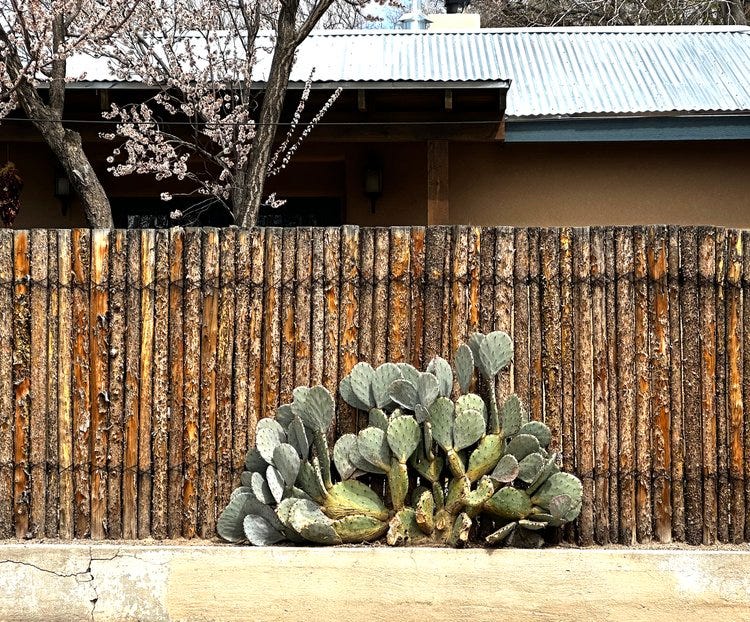
An acequia is a structural boundary that guides the flow of water across a landscape. In designing the scarf, she drafted the pattern in CAD software through many iterations, sending those vectors to the laser cutter, making branching channels in thick, premium wool felt and finally finding the right weight and wrap. The wool fibers are cleaned and softened by hand, resulting in a structured scarf that expresses the Acequias in a beautiful wrap.